It has now been more than five years since the launch of ‘The Song of the Ice’, causing me to reflect on its creation and evolution through performance.
Creation involved a lot of hard work on the computer. For example, Part 1 ‘Isolate’ involved digitising and animating continental outlines from videos made by Chris Scotese. I checked these against the latest scientific literature and validated conclusions with Teal Riley at the British Antarctic Survey (BAS). 180 million years was compressed into 5 minutes and the music composition was synchronised to the graphics. This section was perhaps the most difficult to execute - but, sadly, seems to have had less direct impact on non-geologists.
Fun and innovation was a feature of part 2 ‘Grow’. Following an idea from Andy Smith (BAS), geophysical ice quake recordings by Sofia Kufner were taken into the recording studio to turn into sound that humans could relate to, taking our imaginations to a dark place beneath the ice. Stuart Hamilton at Castlesound and I had a great day doing this - although I recall the look of mild horror on his face when confronted with raw geophysical data at the start of the morning. Beautiful images from my fieldwork were digitised by Chris Bell and set to music that has been described as ‘playful’ reflecting the growth of the ice sheet from infancy to maturity.
Listener emotional reactions have been strongest to part 3 ‘Breathe’. Atmospheric carbon dioxide concentrations from the past 800,000 years from ice cores, measured in parts per million (ppm), were provided by Rob Mulvaney at BAS. I converted these to a tune with notes whose frequency is measured in cycles per second (Hz). The music ends on the last, sustained, highest note (Ab) reflecting the abrupt recent rise in concentrations to above 415 ppm. People have responded by calling the music ‘beautiful’, ‘evocative’ and ‘sadly relevant’.
Performance over the past 5 years has evolved to become more of personal response to the continent, rather than just a performance of the music. I now include an introduction to heroes from the heroic days of Antarctic exploration and a comparison of observations during my Antarctic visits in the 1980s and on my return in 2024. This inspired a new part 4 ‘Change’, set to images of increased snowfall on the mountains, absent sea ice, prospering seals and whales, and a noticeable ‘greening’ of islands.
Audience interaction has become an increasingly important part of the performance at festivals and conferences across Britain. A Q&A session has helped develop a deeper understanding, interest and affection for the southernmost continent. There are always surprising questions. It has been heartening to see a healthy mix in the audience demographics of age, gender, and visible diversity.
After a break in 2025, I look forward to bringing The Song of the Ice back to festivals in 2026, hoping to add even stronger visuals to increase impact.
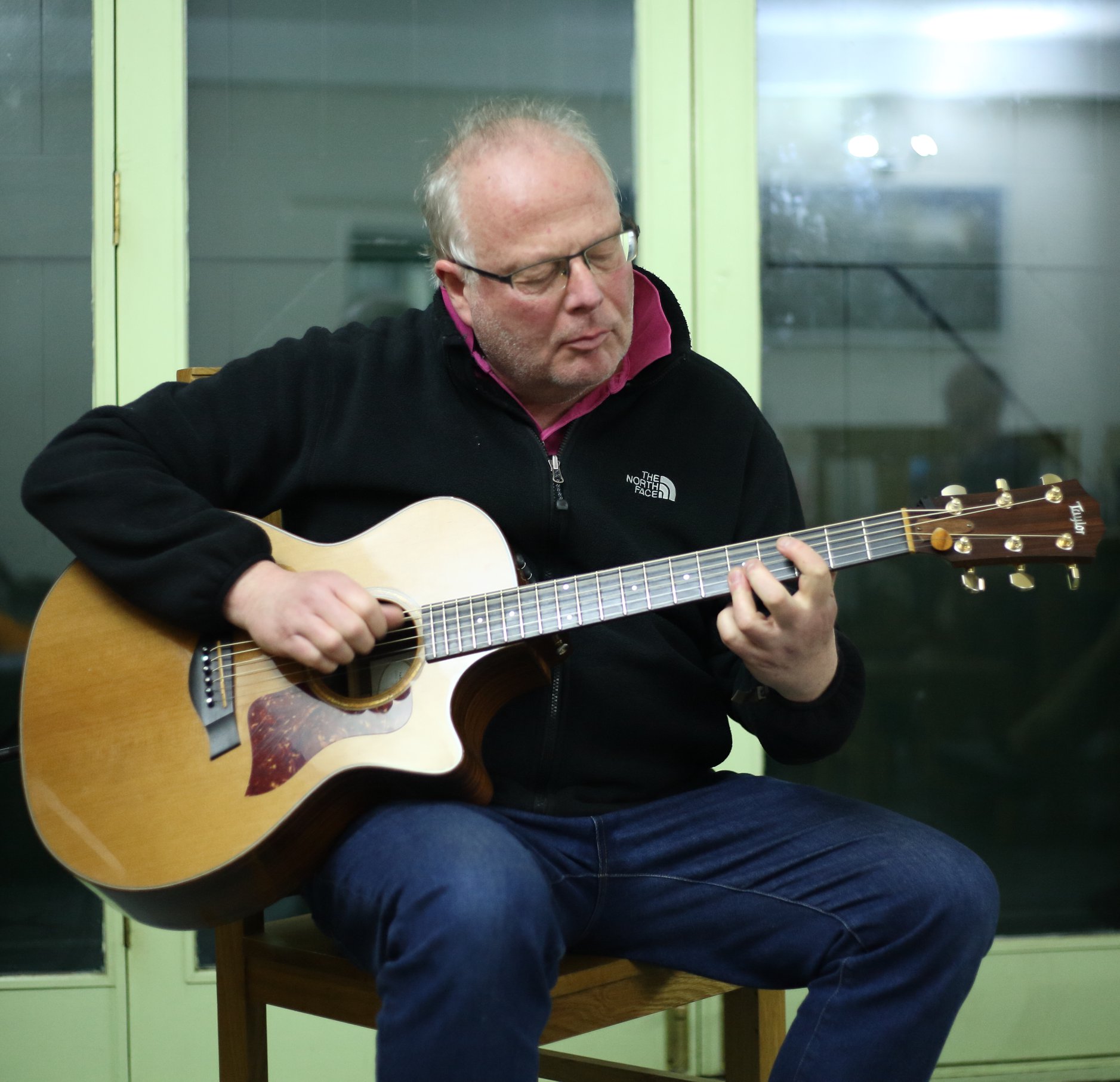
2020 - unveililing a ‘first draft’ to Antarctic friends at a remote hostel in the hills
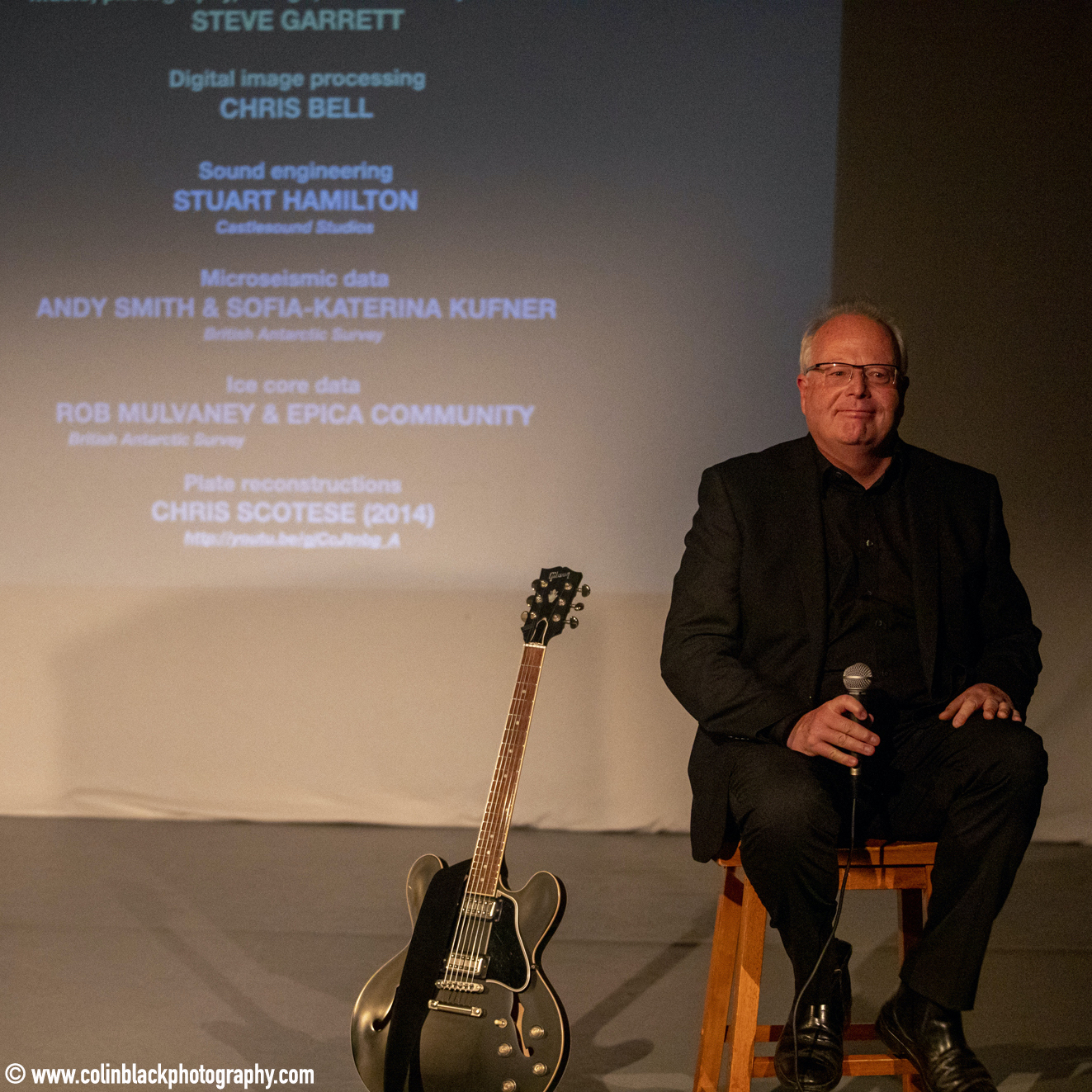
2021 - Q&A session after live premier at Sound Festival
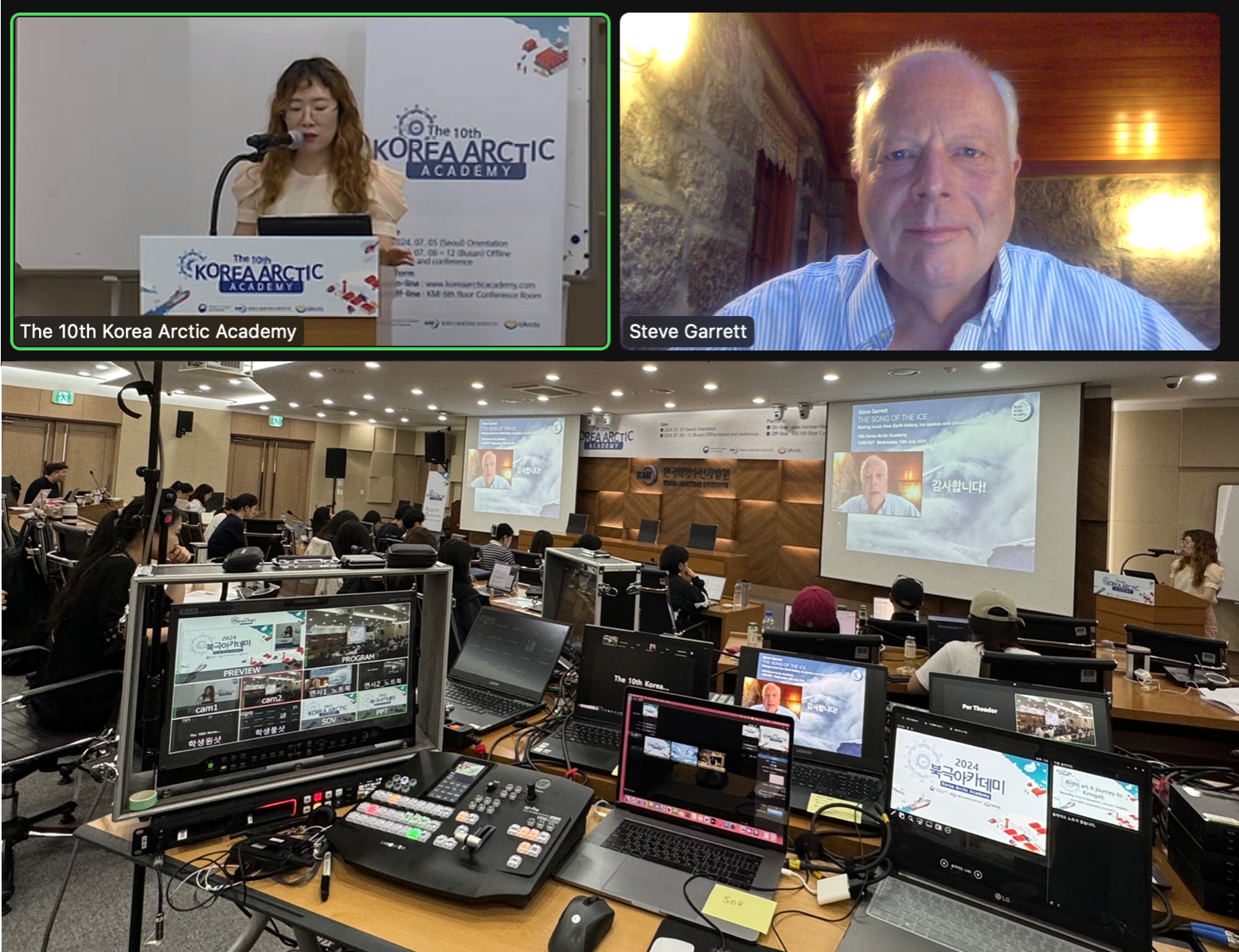
2024 - remote presentation to the Korean Arctic Academy
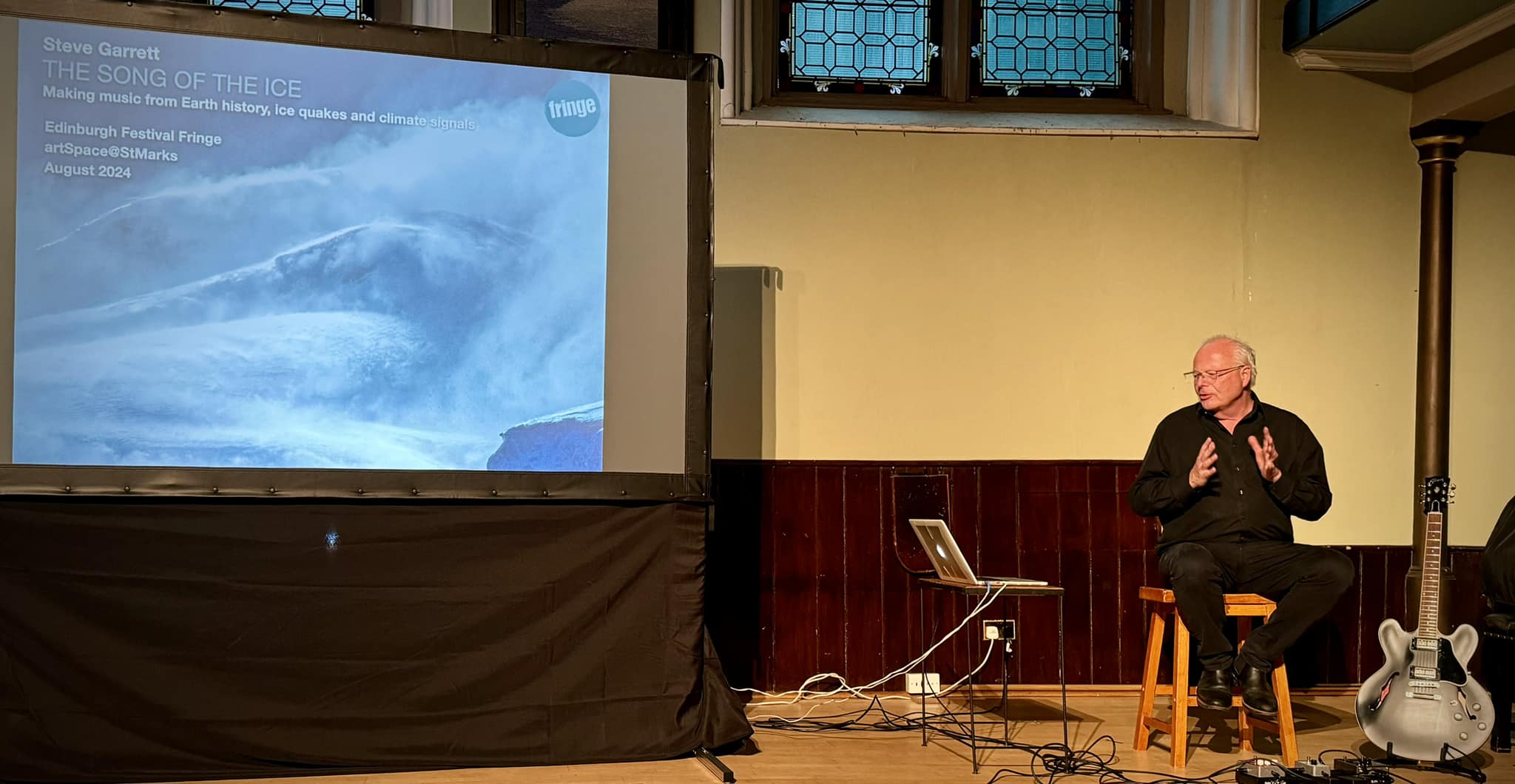
2024 - Edinburgh Festival Fringe
BAS press release for online launch event
https://www.bas.ac.uk/media-post/earth-day-2020-the-song-of-the-ice/
Geoscientist article
https://www.geolsoc.org.uk/~/media/shared/documents/geoscientist/2020/august%202020/Geo_August2020_PN.pdf
The Song of the Ice - live
https://stevegarrettguitar.com/the-song-of-the-ice-live
Steve Garrett guitar events
https://stevegarrettguitar.com/events